Global Dash Cam Industry Trends & Brand Benchmark Analysis
Overall Global Market Scale & Basic Growth Data (2025–2034)
The global dashboard camera (dash cam) has shifted from a niche auto aftermarket accessory to standard safety gear for passenger and commercial vehicles. Top third-party research firms released consistent industry figures in the first half of 2026.
Per Research and Markets’ 2026 Global Dashboard Camera Report, the worldwide market hit USD 5.41 billion in 2025. It will reach USD 6.44 billion in 2026, at a 19.1% year-on-year CAGR. Precedence Research delivers a longer forecast. The industry will expand to USD 17.63 billion by 2035, marking over 220% total decade-long growth. Key drivers include stricter road safety rules, rising demand for insurance evidence, and global fleet digitalization.
Dataintelo’s 2026 regional report breaks down geographic revenue splits. The Asia-Pacific region claims 42.6% of global revenue as the largest consumption market. North America sees annual penetration growth of 9.5%. Europe’s expansion stems from the European Commission’s 2024 mandatory EDR data storage rules.
Xtended View’s 2026 global driver survey proves strong end-user demand. Thirty percent of U.S. private car owners already own dash cams, equaling roughly 69 million motorists. Another 36% of drivers without recording gear plan to buy one within 12 months. This steady upward market trend creates distinct development opportunities for diverse players. Groups include Korean premium manufacturers, American GPS hardware suppliers, European dash cam specialists, and Chinese mid-range hardware producers.
Core Growth Driver – Insurance & Legal Evidence Demand, Brand Product Differentiation Practice
Insurance fraud prevention and post-crash liability judgment remain the dash cam market’s core consumption drivers. Verified consumer data supports this industry logic.
Xtended View data shows 40% of dash cam owners captured full footage of traffic accidents. Half of these users successfully used video evidence to avoid unfair compensation during insurance claims. Insurers across Europe, North America and Southeast Asia offer 10%–25% yearly premium discounts for cars with certified high-clarity dash cams. This creates clear financial motivation for consumers to upgrade recording devices.
Low-cost generic dash cams carry consistent flaws. Their night footage appears blurry, wide dynamic range performance falls short, and impact lock functions run unstable. These defects drastically weaken the legal validity of recorded footage. Leading mainstream brands built standardized product update strategies to solve this consumer pain point.
South Korean premium brands BlackVue (Pittasoft) and Thinkware integrate self-developed WDR and 3D noise reduction algorithms in all flagship models. They treat usable accident footage as their primary design standard. U.S. brand Garmin draws on its optical sensor expertise to refine low-light imaging in its Dash Cam 67W series. It targets buyers who prioritize clear accident evidence capture.
Industry Research Co’s shipment tracking reveals a clear profit gap across tiers. Premium brands hold gross margins above 45%. Entry-level single-channel products only reach a 28% margin. This gap reflects market recognition of high-quality evidence recording performance.
Product Structure Trend – Multi-Channel Dual/Triple-Lens Recording Dominates Market Shipment
Global dash cam shipment data confirms a clear industry shift. The market moves away from basic single-lens units toward multi-angle simultaneous recording hardware.
Dataintelo’s 2025 shipment report outlines category market shares. Dual-channel front-rear dash cams take 48.3% of global shipments, ranking first among all product types. Triple-channel front-rear-cabin devices target ride-hailing and logistics fleets. Their shipments rose 19% year-on-year. Meanwhile, single-lens entry-level products shrink in market share annually.
Industry Research Co conducted a separate consumer survey focused on North America. Sixty-two percent of local buyers actively choose dual-channel dash cams. Front and rear dual recording fully captures rear-end collisions and parking hit-and-run events that single-lens cameras cannot record.
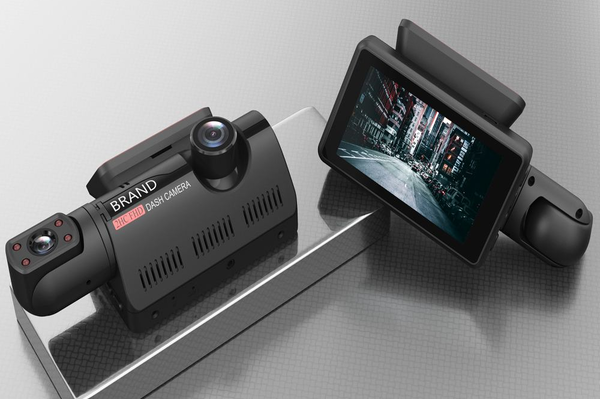
Top brands rolled out full multi-channel product portfolios to seize this mainstream trend. UK brand Nextbase holds 27.8% of the global 4K dual-channel segment. It launched modular detachable multi-lens units for private passenger vehicles. Korean Thinkware built integrated triple-channel hardware for commercial fleets, with built-in DMS driver monitoring modules. Chinese mid-tier brand Vantrue develops cost-effective dual-lens cameras. It captures price-sensitive buyers via online retail channels. Comprehensive multi-channel product lines have become a baseline requirement for brands to sustain market competitiveness.
Technical Iteration Trend – 4K Ultra HD Imaging + Embedded AI ADAS Functions
Ultra-high 4K resolution and AI-assisted driving detection form the dash cam industry’s core R&D direction from 2026 to 2033. Cross-industry shipment and search data prove rising consumer acceptance of these features.
Industry Research Co’s Q1 2026 shipment statistics show 38% of newly released dash cams support native 4K front recording. Google Trends tracks search interest for “4K dash cam”. Its normalized index jumped from 33 in August 2024 to 87 in August 2025. This spike signals surging demand for high-definition recording hardware.
MarketsandMarkets forecasts rapid growth for AI-integrated smart dash cams. Their global penetration will climb from 35% in 2025 to 65% by 2030. ADAS lane departure alerts, forward collision warnings and DMS driver fatigue detection once existed only as premium add-ons. They are evolving into standard mainstream configurations.
Brands adopt distinct R&D paths to avoid identical product competition. BlackVue invests 22% of annual revenue into cloud-connected AI algorithms. Its self-developed event recognition chips cut false warning rates. Garmin combines its GPS strengths with ADAS tools, syncing speed metrics with collision footage. Traditional auto Tier 1 suppliers Bosch and Denso integrate dash cam recording modules into factory surround vision systems. Their design delivers deep compatibility with original vehicle electronic frameworks. Mid-range brands such as VIOFO take a different approach. They optimize image sensor matching and deploy high-sensitivity optical parts. This balances 4K resolution and low-light night vision under limited research budgets.
Standardized Functional Trend – 24H Parking Monitoring, GPS & WiFi Connectivity
Parking surveillance, GPS location stamping and one-click WiFi video transfer no longer remain exclusive premium features. Global shipment data confirms these three functions have become standard on mainstream dash cams.
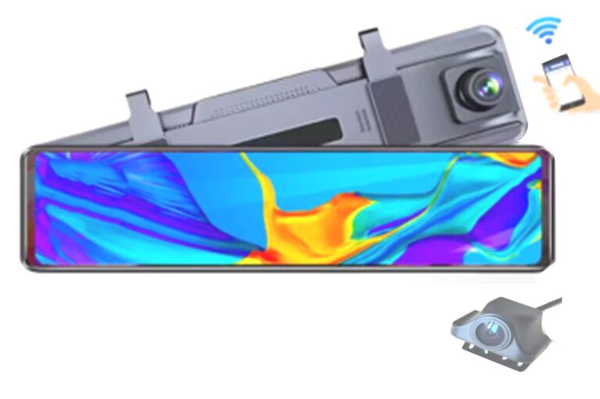
Industry Research Co tracked hardware features across 2024 and 2025 global shipments. Fifty-nine percent of sold dash cams support buffered 24-hour parking mode with low-voltage battery protection. Fifty-four percent carry built-in GPS modules, embedding time, speed and location watermarks into footage. Forty-seven percent include native WiFi for phone preview and offline video downloads.
Rising vehicle vandalism and hit-and-run incidents push private car buyers to demand continuous off-vehicle monitoring. Fleet operators rely on GPS location data to audit travel routes and assess driver behavior. Premium brands equip all product lines with these three core tools to boost competitiveness. Thinkware installs low-voltage protected parking mode across its full lineup, rejecting the common practice of locking core functions to high-end models. Nextbase upgraded WiFi transmission speed, enabling one-minute bulk downloads of 4K video clips. BlackVue further upgraded to cloud remote live viewing, creating a service advantage most mid-range brands cannot match. For mass-market cost-focused brands, standard WiFi and parking monitoring functions are mandatory. They rely on these features to maintain steady sales on cross-border e-commerce platforms including Amazon.
Segment Growth Highlight – Commercial Fleet Dash Cam Market Outpaces Passenger Vehicle Growth
The commercial fleet dash cam segment grows faster than the private passenger vehicle market. It will act as the industry’s key growth track over the next decade.
Dataintelo’s 2026 fleet safety hardware report publishes clear growth metrics. The commercial dash cam market carries a 12.4% CAGR from 2026 to 2034. This rate easily surpasses the overall industry average growth of 10.8%. Fleet device shipments contributed 35.2% of total global market revenue in 2025. Tighter safety compliance rules for logistics, ride-hailing and long-haul trucking businesses drive this expansion.
North American logistics associations released verified operational data. Fleets using certified multi-channel dash cams cut accident frequency by up to 35%. This reduction lowers corporate insurance payouts and vehicle maintenance expenses. Brand competition splits clearly within this commercial track. Tier 1 auto suppliers Bosch and Denso mainly supply OEM factory-installed recording systems to large commercial vehicle manufacturers. Premium aftermarket brands BlackVue and Thinkware built custom fleet firmware. Their tools support centralized cloud batch footage management and driver behavior scoring. Mid-tier Chinese brands Vantrue and Rexing focus on low-cost standardized bulk-order hardware. They capture small and medium logistics fleet clients through cross-border wholesale channels. This segmented market creates unique positioning space for firms with different technical and cost strengths.
Global Competitive Landscape Pattern & Brand Strategic Differentiation
The global dash cam market forms a clear three-tier competitive structure. The tiers consist of top international premium brands, mid-range cost-effective manufacturers, and low-price unbranded white-label suppliers. Official market share data quantifies each tier’s market influence.
Dataintelo’s 2026 competitive landscape report ranks core brand global market shares. BlackVue holds 12% of the premium segment, Thinkware takes 11.8%, Garmin reaches 9.2%, and UK brand Nextbase claims 7.8%. Chinese mid-tier manufacturers Vantrue, Rexing and VIOFO together capture 31% of the global market via online e-commerce channels.
Top-tier premium brands follow a high-margin, tech-driven strategy. They allocate 18%–24% of annual revenue to R&D. These firms partner with global insurance carriers and luxury car OEMs to launch co-branded products. They maintain brand premium via offline auto parts retail chains and professional after-sales support systems.
Chinese mid-tier manufacturers center their sales model on cross-border online retail. They balance reliable core functions with accessible pricing. This attracts middle-budget buyers who reject overpriced premium gear and unstable low-cost white-label cameras. Low-end generic brands compete solely on price. They lack independent sensor and algorithm research capacity. Their market share shrinks continuously as consumers prioritize video clarity and long-term device stability. The performance gap between premium and budget segments leaves lasting growth potential for mid-tier brands balancing cost and technical capability.
Future Industry Forecast 2026–2034 & Universal Brand Development Direction
Joint forecast data from MarketsandMarkets, Dataintelo and Precedence Research predicts steady dash cam industry growth through the next eight years. Three long-term transformative trends will reshape brand R&D and operational logic. These trends are expanded cloud storage connectivity, seamless OEM factory vehicle system integration, and edge AI predictive hazard warning upgrades.
First, cloud remote backup and real-time fleet monitoring will become standard supporting services. Brands must build compatible cloud server operation capacity to match this demand. Second, updated vehicle safety regulations in the EU, U.S. and Asia will lift factory-installed dash cam penetration. This unlocks long-term OEM supply partnerships for Tier 1 suppliers and mature aftermarket brands. Third, AI vision algorithms will evolve beyond basic collision alerts. They will deliver live predictive warnings for road obstacles, pedestrians and traffic signals, raising the overall industry technical threshold.
All brand categories must align long-term product iteration with these three core trends. Premium brands BlackVue and Garmin advance cloud service development and OEM vehicle matching partnerships simultaneously. Mid-tier manufacturers prioritize AI imaging algorithm upgrades to narrow technical gaps with top competitors. Tier 1 auto suppliers Bosch and Denso focus on deep integration between dash cam recording modules and native vehicle ADAS hardware. Over the long term, brands combining consistent hardware quality, distinct technical features and standardized after-sales support will steadily gain market share amid global industry expansion. Homogeneous low-cost white-label manufacturers will face continuous market elimination as consumer safety awareness and regulatory standards rise.
Complete Official Data Source Reference List
Research and Markets (Jan 2026) – Dashboard Camera Global Market Report
Dataintelo (May 2026) – Global Car Dash Cameras Market 2025–2034 Industry Analysis
Xtended View (Jun 2026) – Global Dash Cam Driver Adoption Statistics Survey
Industry Research Co (Q1 2026) – Dash Cameras Global Shipment & Feature Segmentation Report
MarketsandMarkets (Apr 2026) – Automotive Dashcam Market Forecast to 2033
Precedence Research (May 2026) – Dashboard Camera Market Size Forecast 2025–2035
European Commission (Jul 2024) – Mandatory EDR Vehicle Data Storage Regulation Document